The Uses of Shame

Shame is good. Shame is a tremendous weapon against Resistance. Along with habit, momentum, aspiration, anger, eros and joy, shame can be a mighty ally in the never-ending guerrilla campaign against self-sabotage.
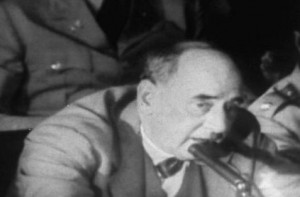
Our hero: Attorney Joseph Welch from the Army-McCarthy hearings of 1954
What is shame? Shame is the emotion we feel when we are guilty of acts that are unworthy of us.
Resistance hates shame. Because Resistance knows that once we feel shame, we are likely (goaded by this extremely unpleasant sensation) to take action. We are likely to gird our loins, put some starch in our backbone, kick ourselves in the ass–and actually start doing our work.
Warrior societies are almost always shame-based. Samurai culture. The Zulus, the Apache, virtually every tribal culture is shame-based. The ancient Spartans were masters in the use of shame.
These societies used shame to enforce and incentivize actions of virtue. If a Spartan warrior showed fear on the battlefield, his own mother would turn against him. There’s a story in Plutarch about two Spartan brothers who were fleeing from the enemy. Their mother, seeing them running toward her, is supposed to have lifted her skirts and cried, “And where do you think you’re running–back here from whence you came?”
Young Spartan girls would dance mockingly around any returning warrior who had not held his ground, singing ditties of shame. Native American tribes did the same. Shame, these cultures knew, is a powerful counteractant to fear. Marching into battle, we may feel our puckerstrings tightening and start to think about hightailing it for the hills. But when we imagine those pretty young gals cavorting around us back home and making fun of us, we gulp twice and keep marching.
Resistance, of course, is fear. Fear is what stops us, as artists and entrepreneurs, from facing the blank page, entering the empty studio, picking up the phone and making cold calls. That’s when we need shame. That’s when shame is our best friend.
If you’re in AA, you know all about shame. The stories are always the same: a descending succession of personal failures, defeats and acts of cowardice, betrayals of self and others–until the ultimate debacle, which finally triggers … shame. “That’s the last straw,” we say to ourselves. “This way I’m living has got to stop.” And we resolve–for real, this time–to change.
When the threshold of shame has been crossed, self-respect kicks in. Self-respect is good. We want self-respect. When we feel self-respect, we say to ourselves, “This act is unworthy of me. I’m better than this.” Shame steps up and slaps us across the face. Like Cher in Moonstruck: “Snap out of it!”
Another way to think of shame is to consider its opposite: shamelessness. In the Army-McCarthy hearings of 1954 came the famous rebuke of Joe McCarthy’s Communist witch-hunting tactics from Army attorney Joseph Welch: “Have you no sense of decency, sir? At long last, have you left no sense of shame?”
Reality TV shows are all about shamelessness. The spectacle of contestants eating worms and bugs to gain their fifteen minutes of fame is like a car crash that we can’t look away from. The producers contrive situations whose aim is to produce (from real people, not actors) acts of shamelessness–lying, cheating, back-stabbing another contestant–which can be taped and broadcast for our delectation. It’s nauseating, isn’t it?
Real work, of course, is the opposite of a reality show. Real work is not a stunt. It’s not a cheap shot or a shortcut. Shamelessness gets us nowhere in the world of real work. We need real, old-fashioned shame.
There’s one critical distinction, however, between warrior-culture shame and the kind we as artists and entrepreneurs need. Spartan shame is communal; it’s enforced from without, by the community. The kind of shame we need is different. It’s harder. Ours has to be internal. Self-imposed. Because our failings are so frequently acted out in private, inside our own hearts, with no witness but ourselves, we ourselves have to take responsibility.
There’s nothing fancy about this. It comes down to simple self-talk. “Okay, that’s enough with the web-surfing/videogame-playing/casual sex/latte-swilling/whatever.” We forgive ourselves our lapses (we are only human, after all) but then we gear up for business. We pull the 1954 microphone a little closer, we lean forward toward our reflection in the mirror. “At long last, sir, have you no decency? Have you left no sense of shame?”
And we get to work.
DO THE WORK
Steve shows you the predictable Resistance points that every writer hits in a work-in-progress and then shows you how to deal with each one of these sticking points. This book shows you how to keep going with your work.

THE AUTHENTIC SWING
A short book about the writing of a first novel: for Steve, The Legend of Bagger Vance. Having failed with three earlier attempts at novels, here's how Steve finally succeeded.
NOBODY WANTS TO READ YOUR SH*T
Steve shares his "lessons learned" from the trenches of the five different writing careers—advertising, screenwriting, fiction, nonfiction, and self-help. This is tradecraft. An MFA in Writing in 197 pages.
TURNING PRO
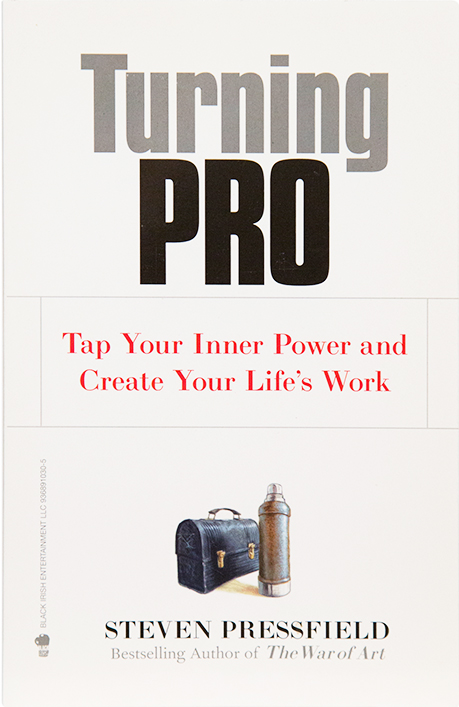
Amateurs have amateur habits. Pros have pro habits. When we turn pro, we give up the comfortable life but we find our power. Steve answers the question, "How do we overcome Resistance?"
What a great piece, I love it….keep them coming!
Hi Steven, thanks for the blog post – as always, food for thought. It reminds me of an interview with children’s author Kate DiCamillo. She wanted to be a writer, but couldn’t face writing (i.e. Resistance was getting the better of her) – so she just kept thinking of herself as a writer without actually writing anything. Ten long years passed – and in the end, she says she had such a high level of self-disgust (i.e. shame, you would call it) that nothing could stop her. She got 400 rejection letters but kept going nonetheless because she knew this was the only way to gain back her self-respect. Yes, I agree, shame can be a powerful motivator in the fight against Resistance. And one way to increase our level of shame is to tell other people about what we are resisting. If nothing else, them periodically asking us ‘so how is your book/business/project etc. going’ should kick us into action.
Maybe this tactic might work on TSA to get them in shape. On second thought.
Thanks for writing this. It’s liberating to know that there’s nothing wrong with weilding shame against oneself as a weapon in the battle against Resistance (and anger—I would love to hear your thoughts about that). So much of of pop psychology makes it seem as if “moving toward” goals are superior to “moving away from.”
My most effective method of inducing internal shame is to ask myself: “is this the example I want to set for my son?”
Great point Annabel. And it’s looking in the mirror at 0200 and asking “is this the best I can do? Is this how I want to be remembered?”
Thanks! Just what I needed to hear this morning.
Thanks for such a great post Steven. I think that the more we address our shame and look deep inside ourselves to explore how our fear/laziness etc. is holding us back the greater chance we have got of gaining the upper hand against the Resistance. I agree with Annabel – setting an example for your children can serve as a great motivator.
Great post Mr Pressfield ! I always ask myself ” If not now ,when? and if not you then who? ” pretty sure it comes from the Bibke and stuck with me after 12 years of Catholic school!!
Just finished War of Art — can’t stop thinking about it — and was even happier to see WW. But I need to stop reading this, because I’m starting to feel ashamed that I’m doing too much reading and not enough creating. Thanks!
Never ceases to amaze me – your blogs (and books) fire me up and then fuel my fire….. okay, going back to work now
Fantastic. Exactly. A wake up call.
Great post. I found it while surfing the web instead of writing. Time to quit that and go do what I should be doing.
This is such an amazing post. The War of Art was monumental and I’m so glad you’ve continued it here.
Many thanks.
Your blogposts are prayers to begin my day and work. Thank you, brilliant Steven.
It is such a shame not to know the real truth about Joseph Welch whom Pressfield proclaims a “hero.” More shameful is the never ending anti McCarthy bandwagon that we all must jump on!
If you are not too shamed into reading some truth of the matter go to this link below and read what really happened. If the attention span is not very long scroll down somewhere around the middle of the article where you will find the story of Mr Welch.
http://www.aim.org/aim-report/aim-report-looney-clooney-smears-senator-mccarthy-january-a/
Tina McCann