Training

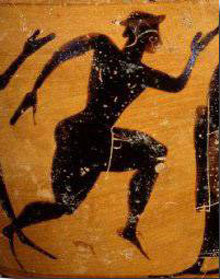 A few years ago, I got it into my head that I wanted to run a marathon. The experience turned out to be a life-changer, not so much for the race itself (though that was pretty great too) as for the training that built up to it.
I live in Los Angeles. There was a hospital downtown, Orthopaedic Hospital, that was offering a free six-month training program leading up to the L.A. Marathon. Classes met once a week, Sunday morning. Each session was on a different subject—hydration, footwear, “hitting the wall,” etc. Probably 400 runners became regulars. The program helped us set up our individual training schedules. I taped mine to the door of my fridge. It became a religion.
When you train for something as hard-core as a marathon, you quickly discover that your fellow runners are doing it for some pretty serious reasons. Many, particularly women, were coming out of divorces. Others had lost jobs or suffered traumatic personal reversals. Lots of people were running for others—a child with cancer, a brother wounded overseas.
We bonded like bandits. Everyone helped everyone else. Very few were real runners. A fast time? We just wanted to finish.
I didn’t have the concept of Resistance then. I hadn’t thought about “turning pro.” Both, it turned out, were central to the experience. All of us wannabe marathoners had gravitated to the challenge with remarkably similar hopes—and fears:
1) High personal stakes
Each Sunday after class, our mob would go for a training run and then coffee. Many of us, as I said, were struggling with crises in our lives. Tears flowed, confessions spilled: the newly-divorced mom who didn’t know how she’d support herself and her kids, the cancer survivor still riddled with fears of a relapse, the fireman who’d quit drinking but didn’t know how long he could stay sober. Each of us had his own Alien, his own Terminator breathing down our necks. We knew that if we didn’t do something, that bastard was going to get us.
2) A heroic enterprise
The answer was a heroic enterprise. We couldn’t afford Mt. Everest, but we could lace up a pair of running shoes and see if we could keep stumbling and bumbling for 26.2 miles. What was crucial was that the enterprise test us to our cores. Would we be hailing a cab at the twelve-mile mark? All each of us knew for sure was that we would be proud of ourselves if we could hang in all the way. “If I can do this, I can do anything.” That was our Sunday mantra.
3) A metaphor for our lives
The run, if it was going to work a change in our lives, needed to be more than heroic. It also had to respond to application of the will. The real-life events that had impelled us to this place didn’t do that. Cancer didn’t respond to the will. Divorce didn’t. Failure didn’t. Addiction didn’t.
Running did. That was what we needed. We were running to train our wills, even if few of us could have articulated it. We were in the race to prove to ourselves that, in the face of obstacles that we feared were greater than our capacities, we could endure and prevail. “If we can do this, we can do anything.”
4) Demystification of the process
The schedules on our refrigerator doors ran from week one to week twenty-six. They started with jogs of half a mile. We could do that. We ticked off one week, then another. Suddenly the sked said week 26 and we were logging forty miles per—with our long runs at sixteen, eighteen, twenty. Could this be us? The same punters who were gasping and wheezing halfway down the block six months earlier?
Friends helped. Family rallied around. But in the end each of us had to run the miles alone. Training. It worked. No magic. No mystery. Just effort over time. We got it. It empowered us.
Race day. How did I finish? Let me put it this way: from where I was, if I squinted ahead really hard, I could almost see the back of the pack. But I crossed the finish line, and so did all my buds from Sunday.
A big part of The War of Art came out of that experience. I even ran a second marathon, in San Diego the following year, before hanging up my spikes. I’ve used those principles of training ever since. The only difference is now it’s not a metaphor, it’s my real life. An awareness of high stakes; a heroic conception of the challenge; demystification of the process; helping friends and being helped by them; and application of the will. Self-motivation, self-validation, self-congratulation.
And training. The magic produced by effort sustained over time.
Few things in life are sprints. Almost everything that’s worthwhile is a marathon. So here’s to my fellow shin-busted, spine-tweaked, carb-loaded foot sloggers. Thanks for teaching me the virtues of the marathoner’s mind-set and showing me the magic of training over time. We went in wanting to believe and we came out believing. If we desperate housewives and sobriety-tested firemen can do it, we can do anything.
DO THE WORK
Steve shows you the predictable Resistance points that every writer hits in a work-in-progress and then shows you how to deal with each one of these sticking points. This book shows you how to keep going with your work.

THE AUTHENTIC SWING
A short book about the writing of a first novel: for Steve, The Legend of Bagger Vance. Having failed with three earlier attempts at novels, here's how Steve finally succeeded.
NOBODY WANTS TO READ YOUR SH*T
Steve shares his "lessons learned" from the trenches of the five different writing careers—advertising, screenwriting, fiction, nonfiction, and self-help. This is tradecraft. An MFA in Writing in 197 pages.
TURNING PRO
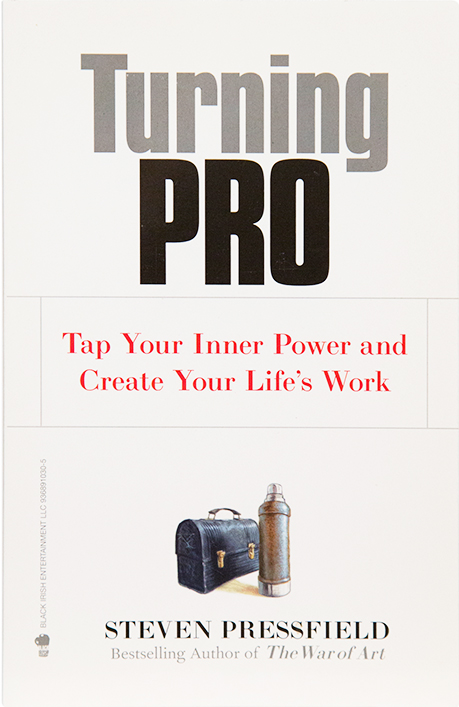
Amateurs have amateur habits. Pros have pro habits. When we turn pro, we give up the comfortable life but we find our power. Steve answers the question, "How do we overcome Resistance?"
You speak true, as ever. Can’t quite figure out what I want to say that won’t just be gushy praise, which is perhaps debatably nice, but not particularly useful.
I think it comes down to the power of hearing those simple yet mind-blowing goals enunciated (goals that of course resonate with The War of Art wisdom). Especially that combo of heroic enterprise and training of wills. Don’t think I’ve heard or thought of it like that before, but it helps me understand my attraction to activities that sound like tough fun with a side of scary. Well, maybe that’s more about facing fear, so perhaps that’s heroic enterprises tucked into everyday life? Training of will and the whole concept of training is that “over time” piece, not isolated events (altho perhaps if there’re enough of them…).
Training of wills. That’s fascinating. There’s real stuff there.
Thanks, Steven! You and your buds discovered a wonderful idea: Life may not be going your way, but you can make something good happen by focusing on a challenge that is of your own making. “Lameness is an impediment to the limb, but not to the will”-Epictetus
I feel like I’m undergoing a similar transformation right now. I’m training for an MMA fight, which is crazy I know, but I feel like I need to do this for reasons that I can’t quite articulate, but that probably have something to do with me throwing off the shackles of mediocrity forever(hopefully). Your thoughts on training definitely resonate with me. Using the take away lessons from this (I like how you’ve distilled them), I hope to improve on my writing output too. Thanks Steve.
Thank you Steven,
I can relate to that. I trained a decade to win gold. Whether you call it the “10,000 hour rule” or a “decade of dedication” – there are NO shortcuts. That’s why those Reality TV “Wannabes” don’t last – haven’t put in the hours/training. 🙂
Thanks again,
Annette
This is spot on – a fact I can attest to as both a fellow runner (4 marathons, I’ll likely do a 5th this year) and fellow artist-in-it-for-the-long-haul, as it were.
Training is a journey, not a means to an end. Race day is a different thing, a specific and valuable accomplishment, but the real value is in the training and the commitment to it and the changes you undergo as you go through it – and which cannot happen any other way. This applies to both running and every creative modularity I know of.
I actually wrote a little post along these lines last fall… in case anyone’s interested: http://cliffjump.net/look-before-you-leap/
Thank you for this post! A while back you asked for suggestions for a War of Art follow-up. Training is exactly the subject I would be looking for. As a dancer, martial artist and personal trainer, I figure there has to be a way to train for our encounters with Resistance. Marathon training is a terrific reference.
Profound and inspirational as always Steven.
What we most want and what we most need often costs us greatly to achieve.
In pushing ourselves when it matters most we are grasping at the question that lives deep inside: how to live. When we choose to live with the acceptance of failure and the struggle against it we are truly living.
Dang! I needed this. The first time I decided to run, I signed up for a 5K on the day of the race. Before you judge me, just know that the sponsored charity seemed worth inflicting myself with pain (Free Wheelchair Mission). It took me forty-five minutes to run the 3.1 miles on a flat “easy” course. I think I was last, unless the man walking the dog counts. After, I could not walk for days. I learned that training is important.
I signed up for run/walk training sessions. I ran dozens of races, numerous half-marathons and even trained for a marathon. Unfortunately, a labrial tear in the left hip during the 20-mile run took marathons, actually, any type of running, off my to-do-list. However, I am convinced that I would have done well, I would have finished, I would have raised my hands up high across the rubber mat and then collapsed.
You have encouraged me to apply this experience to my writing. I have been struggling to get started, but no more. Watch out Resistance, I know how to train and I have the perseverance of a runner. Even if my fingers crack, I can always dictate. Thanks again!
Another Festivus miracle! It’s great to learn, even well after the fact, that the “marathon” response is more natural than crazy. In 1999 my wife of fifteen years left me with an empty box for a home and a claim on most of my disposable income. I responded by entering the “Body for Life” challenge, finishing strongly and, while not copping the big prizes, picking up several (cherished) honorable mentions. I also rebuilt my home, traded up, furnished it to the point where I could flip through “Architectural Digest” and sneer (sort of), and met/married the Love of my Life. And, yes, we’re living happily ever after. (I insist on it!) Ya do one impossible thing because you must, and nothing is impossible thereafter.
Thanks, Steve. Great notion. (Great site.)
Oh Yes, training, the process of conditioning only possible under the power of habit!
Like the new page!
Gosh, Steve, I wish I had read this before my pathetic attempt at a short “run” today. I woke up this morning and googled “running motivation” for help gearing up for the three measly miles I planned to run with my little girl as she rode her bike ahead of me. I finished my first half-marathon two weeks ago (squinting to make out the back of the pack). So how is it that I struggle so with three? *sigh* But somehow I managed to complete 13.1 miles, and in cold and windy conditions. Did you have miserable training moments???
I can relate to these posts for many reasons. I started training for triathlons over 5 years ago and have made the entire process both mundane and heroic. It took me two years to go from finishing in the bottom third to actually winning my age group. With the occasional top 10 overall finish. Race days feel like Christmas morning to me!
My new training is directed at learning how to write a blog(or is the new term lifestream?) that has a point of view, is relevant to my audience and true to who I am. This will be a true heroic journey for me.
Helen Keller once said, “I long to accomplish a great and noble task, but it is my chief duty to accomplish humble tasks as though they were great and noble.”
Your excellent post reminds me of the truth in this statement. All of us, I think, need some sort of “heroic enterprise” to aspire to, work on, and practice for, whether it’s a running a marathon, starting a company, or writing a book.
I’ve been thinking about this concept – the idea of a quest – for a while now. Funny how you start thinking about something and then you see it everywhere.