Second Act Problems

I’m reading a terrific book by David Mamet called Three Uses of the Knife. It’s not a play or a novel, it’s a treatise on the subject of drama. There’s some great stuff in it, particularly in the section Mamet calls “Second Act Problems,” that we as writers, artists, entrepreneurs (and just plain human beings) can profit from.
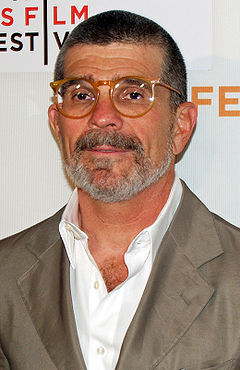
David Mamet at the premiere of "Redbelt"
All writers know: Act One is easy. You come up with some crazy idea and heave it against the wall. Act Three isn’t that hard either. We’ve figured out where we’re going; we just tromp on the accelerator and go there.
Ah, but Act Two …
A joke from the Algonquin Round Table [Mamet writes]: A couple of guys are sitting around talking. One says, “How’s the play going?” The other says, “I’m having second act problems.” Everybody laughs. “Of course you’re having second act problems!”
What makes Act Two so hard is it’s too much like real life …
In his analysis of world myth, Joseph Campbell calls this period “in the belly of the beast”--the time which is not the beginning and not the end, the time in which the artist and the protagonist doubt themselves and wish the journey had never begun. [The artist and the protagonist have hit] the slough of despair: “I had prepared for anything but this.”
The other nasty aspect of Act Two is it’s glamorless. It’s unromantic. Its problems are boring.
In the middle term the high-minded goal [of Act One] has devolved into what seems to be a quotidian, mechanical and ordinary drudgery: now we are not trying to establish a Jewish Homeland but negotiating a contract with a stationer to supply the paper so that we may write fund-raising letters.
Åct Two sucks. In our life and our art. (And Act Two can come at any time in our lives; it doesn’t have to wait for our middle years. You can hit Act Two at nineteen, alas!) In Act Two,we’re stuck. We started out with the noble goal of draining the swamp; suddenly we find ourselves up to our asses in alligators.
How many times have we heard (and said): Yes, I know that I was cautioned, that the way would become difficult and I would want to quit, that such was inevitable, and that at exactly this point the battle would be lost or won … but those who cautioned me could not have foreseen the magnitude of the specific difficulties I am encountering at this point–difficulties which must, sadly, but I have no choice, force me to resign the struggle (and have a drink, a cigarette, an affair, a rest), in short, to declare failure.
Act Two is the epicenter of Resistance. And here Mr. Mamet identifies a villain I have never put my finger on: romance. The romantic notion that Don Corleone, Elvis or Obi Wan Kenobi will swoop down and save us.
In the romance the period of struggles is truncated, formalistic and capped with the intervention of the Fairy Godmother (the God from the Machine, Santa Claus, the arrival of the cavalry.) These romances do away with the quest of the middle term–the problems of the second act–in a way similar to hallucinogens’ promise of the key to the universe. They reduce the difficulty of the problem to zero and then reward the individual for solving it.
What exactly do we want in our second act? We want to get to Act Three. We want, Mamet says,
the precipitation of the end struggle … the granting of the hero’s wish, engendered in the middle term, for a clear-cut fight which would absolutely resolve the question at hand.
This is serious stuff, because if it’s true (and I believe it is), it means asking and answering the really nut-busting questions of our art and our lives. What self-serving delusions are we in thrall to? Why can’t we find peace or happiness–or simply stop ourselves from hurting those we love? Why can’t we get out of our own way? Why do we keep repeating the same self-destructive actions?
There is an answer. There is an Act Three. We can get to that “clear-cut fight.” But the hell of it is slogging through this gloryless, romanceless Act Two.
The true drama, and especially the tragedy, calls for the hero to exercise will, to create, in front of us, on the stage, his or her own character, the strength to continue. It is her striving to understand, to correctly assess, to face her own character (in her choice of battles) that inspires us–and gives the drama power to cleanse and enrich our own character.
Two things I love about David Mamet’s take on this subject:
First, he promises no magic bullet. It is what it is. Each of us has to lick his or her own Act Two, in terms that only he or she can know and can implement. There’s no short cut and no Royal Road.
And second, the concept of seeing this struggle as “second act problems.” We as human beings, Mamet says, are natural dramatizers. That’s how we make sense of our world. It’s our survival mechanism; we can’t help ourselves.
It helps me to think of my own struggles, in life and in art, as a passage in the hero/protagonist’s journey. It helps me to conceive of the struggle as a trial that is part of life, one that every man and women has had to negotiate since our paths crossed that dastardly serpent in the Garden–and with no better tools than you or I have at our disposal now. And it encourages me to remember that there is an Act Three, if we can find the resolve to play it straight in Act Two. And in that third act, we’ll get the “clear-cut fight” we’ve been looking for–the one that will resolve the issue we’ve been struggling with since Act One.
(I should add that David Mamet, the real guy, is a hero of mine. Not only for his artistic gifts, courage and integrity, but also for the life he lives as a man. He and his wife Rebecca Pidgeon live in Santa Monica, not far from me. They are both tremendously involved in the community–politically, spiritually and personally. They support more causes, without ever taking credit, than anyone I know. And they’re both funny. Thanks, David, for the books you’ve sent me just for the hell of it–and particularly for Three Uses of the Knife, which came into my life on its own.)
DO THE WORK
Steve shows you the predictable Resistance points that every writer hits in a work-in-progress and then shows you how to deal with each one of these sticking points. This book shows you how to keep going with your work.

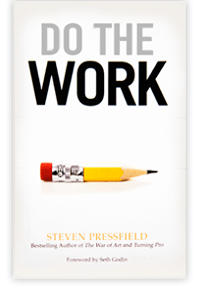
THE AUTHENTIC SWING
A short book about the writing of a first novel: for Steve, The Legend of Bagger Vance. Having failed with three earlier attempts at novels, here's how Steve finally succeeded.
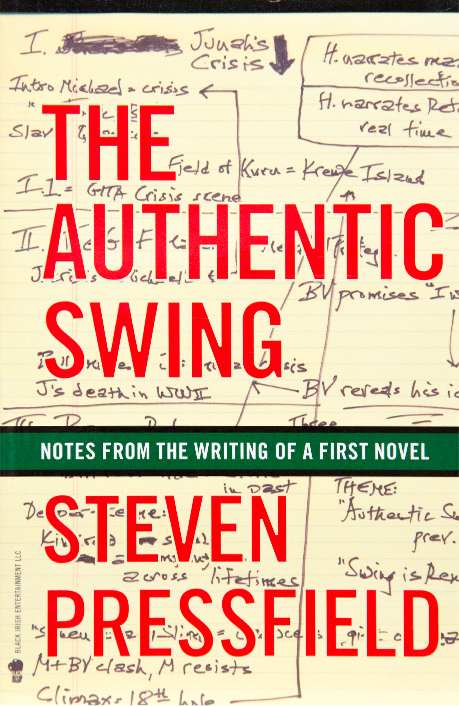
NOBODY WANTS TO READ YOUR SH*T
Steve shares his "lessons learned" from the trenches of the five different writing careers—advertising, screenwriting, fiction, nonfiction, and self-help. This is tradecraft. An MFA in Writing in 197 pages.
TURNING PRO
Amateurs have amateur habits. Pros have pro habits. When we turn pro, we give up the comfortable life but we find our power. Steve answers the question, "How do we overcome Resistance?"
Thanks Steven, I have appreciated all of David’s advice I’ve been able to get ahold of. Lots to think about for strengthening the mid-way point in my second novel.
Ever onward, without the cavalry coming.
Aaw, thank you Steven for your post and “introducing” David to us.
What a “coincidentally” great timing of your post. These kind of synchronicity brings loads of energy for me to cut through to the act three.
Thank you.
Cheers from Slovakia
i.
Brilliant. Thank you Steven
“There’s no short cut and no Royal Road.” Indeed.
Excellent. Thank you, once again, for helping us move past the Resistance.
Onward, to tromp over the Second Act (and the alligators)…
-Jennifer King
Very good. I’ve always enjoyed Mamet’s essays as much, if not more, than his plays (which admittedly I’ve seen mostly in amateur productions).
I just finished Lev Grossman’s The Magicians, which is about exactly this topic, an exploration of obsession with fantasy novels (Narnia, Potter, Tolkien) in the form of a fantasy novel about a school of magic. Highly recommended.
Well, I do not know if there is “an answer”, “an Act Three” and what “clear-cut fight” stands for exactly (propably because I am 28 years old), but I think the nasty aspect of Act Two can go beyond glamorless unromantic and boring problems, can get dangerous or depressing.
I also do not know if it is only in the USA where dreams (after work and exercise) come true..
Two years ago, I came across this: http://vimeo.com/1711302
I haven’t read a single phrase from Harry Potter but I appreciate her modesty admitting that dark side of her personal story…”how far the tunnel can extend”,
the humiliation..the benefits of failure.
and then again, in those bad times what kept her writing and writing and writing..
I am not sure if there is always Act Three..
No,there is not always an Act III. People give up, or go down in flames in Act II all the time. But in writing, usually, if you stick with it, you get there. It isn’t always what you thought, or hoped, it would be, but its there.
Perhaps what Fitzgerald meant about there being no second acts in America is that, in general, we skip directly from exposition to disposition — leaving aside the entire question of development and transition.
We state a problem, erect a goal, and then — there we are — problem solved, goal achieved, never allowing ourselves to show or even acknowledge the work, the movement, needed to get from here to there.
Walter, great observation. Thank you.
I forgot how much I love this book. What a brilliant insight about the “villain” that is the romantic adventure. It’s like a disease that’s crippled our mythmaking.
Thirty-odd years ago it was refreshing to have a Star Wars, a compelling fable of an average schmuck who is elevated to greatness through the intervention of magic. But since then it’s been the go-to adventure story, and generations have been overstuffed on the tale of the Special Kid, who has few real-world qualities but is nevertheless plucked from obscurity by mystical forces and given a stirring quest. Not to say it’s never done well, but we’re up to our eyeballs in heroes who coast to greatness, from Matrix to Harry Potter to Twilight to every shade of superhero shit that comes down the pike. We’re drowning in a sea of bargain-bin Messiah fantasies.
Boy, I sound crankier than Mamet, and I’m not nearly his age! Anyway, great write-up you did. I feel like I need to read it every day for a month.
Reminds me of a short article on 2nd Acts that I ran into about a year ago. People always quote Fitzgerald’s “There are no second acts in American lives” to mean that American’s don’t reinvent themselves, but at least one writer believes it means we tend to avoid the hard slog/dark night of the soul that Steven and Mamet are talking about. According to Earle Palmer Brown, Fitzgerald may have meant that, “…American lives during the Jazz Age were so frantic and frenetic that they went straight from crisis to resolution because there was not enough time for any transition?”
Or perhaps that most Americans refused the pain of the transition and precipitated a false crisis to avoid confronting it when the Romantic illusion didn’t pan out the way they hoped.
Anywho, great article, Steve. Really got me thinking. And if anyone wants to read an excerpt from Brown’s article on Fitzgerald’s quote, they can find one here
– Jeff
@Kevin, nice thoughts. I agree, the “The One” template is getting a bit old, plus the “chosen” aspect (midichlorians, anyone?) robs the story of a lot of its central dramatic conflict. Even though there’s the inevitable moment when they lose their powers, you know they’ll find them again because they are The One. It’s our jobs as writers to work around those cliches and restrictions, find new takes on the hero myth and surprise the Reader.
I’m watching “Redbelt” now on my dvr; just started it last night, will watch the rest soon. Hoping it doesn’t have the same ol’ Mamet directing flaws. He’s a great writer but the films he directs are always lacking something.
Thoughtful and helpful. Something else that occurs to me is that, by depicting the Act 2 struggle as “truncated and formalistic,” romance doesn’t acknowledge confusion, floundering and messiness as common and expected elements of the struggle. Not only is there no shortcut, there’s often no FORMULA either.
As usual, a ‘Pressfield gem’ has arrived at exactly the right time…whew!
I have two brief reflections on this concept of “the second act.”
Although I can’t find it now for the life of me, I remember reading Chuck Yaeger’s account of going through the sound barrier. In a way, it was akin to three acts. The first: the launch of his vehicle and the ignition of its engine. The second: as he approached the “barrier,” Yaeger described the ship pitching and yawing, experiencing turbulence. The third act: emerging over to the other side, when the turbulence disappeared and the flight was as smooth a silk.
In Zen theory, this is the tumult of crossing the threshold between old false ways and new understandings and perceptions.
Therefore, to the extent we are self-reflective, we endeavor to move beyond our own individual first acts and envision a third act of resolution, completion, wholeness and peace. Yet, it is that damn second act that is problematic. Steven, as you have written in The War of Art, this is the point of most challenge, when our habits develop their own gravity, restraining us, and our lives encounter the “pitch and yaw” that frighten us into pulling back on the throttle, abandoning our attempt to break on through to the other side.
Bruce, I love that Chuck Yaeger analogy (or metaphor or whatever it is). Perfect. Thanks!
Great post.
I hate Act 2 🙂
I’ve just dipped my toe in Act II of my own novel, and as predicted by Mamet it is quotidian and I have thought about moving on to other projects. Now I guess I should just get back to it.
Cesar Milan always says its the owner, not the dog that is the problem. I think its the writer, not the work in this case.
Just picked up “3 Uses of the Knife” this morning after reading this post. Here’s a great quote from Stanislavsky Mamet quotes on page 21 addressing the search for perfection in our story telling. I’m a big believer that it’s always a good idea to leave something just a bit incomplete or off-balance.
“There are plays that you leave, and you say to yourself, “By God, I just, I never, gosh, I want to, now I understand! What a masterpiece! Let’s go get a cup of coffee,” and by the time you get home, you can’t remember what the play was about.”
“And there are plays—and books and songs and poems and dances—that are perhaps upsetting or intricate or unusual, that leave you unsure, but which you think about perhaps the next day, and perhaps for a week, and perhaps for the rest of your life.”
love these posts. don’t know what else to write because all is clear and precise on the body.
Not having read the Mamet book, but based on what you say here, the three acts seem to track the three phases you set forth in your book. Act I is deciding on a path, but then encountering and facing the resistance, which sets up the drama. But, then, Act II is the realm of being a pro, slogging, unglamorous, bashing on the keyboard, actually doing it, the drama is internal. Act III is when it comes together, the payoff.
Why does that romantic myth persist though?
Because sometimes it’s true – some do receive answers to their prayers, some are miraculously healed, Mr Right appears and sweeps some off their feet, a talent scout does pick someone from the crowd to be a superstar and somebody always wins the lottery.
The myth of being rescued, of being able to short-circuit the work, of miraculous intervention in our affairs persists because we long for it. So the stories of when it happened get passed around between us and repeated in the media we love to watch.
We love it when Jane Austin makes sure that the hero comes through at the end. It’s comforting. It might happen to us. Real life seems so dull and workmanlike in comparison.
How do we make drama and tell stories that celebrate the hard work of act 2, (dogged persistence, striving) so that our children grow up, not expecting miraculous intervention, but understanding that they can push through to something great if they are willing to work for it?
From a fine artist’s perspective, there is an Act Two in every painting I do. I’ve always called it “the wall”.
Act One is the initial delivery of the idea on the canvas or paper. That exciting light sketch vibrating with potential. The first layers of value and color are applied as I flesh out the composition. Soon there emerges a loose vision of the final result. Then the struggle begins…
Will I find my way to completion without getting lost in the doldrums of Act Two? Or will the piece lose its appeal and excitement and end up gathering dust in the corner of my studio until I declare it a lost cause and paint over it?
Sometimes, no most times, I can push through the wall and burst into Act Three with a rousing finish, but it takes persistence, courage, good light, and a little Cabernet.
I’d should take advice from you here. Which isn’t something I usually do! I like reading a post which will make people think. Also, i appreciate allowing me to comment!
“The true drama, and especially the tragedy, calls for the hero to exercise will, to create, in front of us, on the stage, his or her own character, the strength to continue.” The strength to continue is what matters most 😉
Possibly your best post.