The Log Line of Your Life

Are you familiar with what screenwriters call a “log line?”
It’s an extremely useful tool—not just for writers, but for artists and entrepreneurs of all kinds. Today I’m going to interview an expert on the subject, Hollywood script consultant Jen Grisanti, who’s the author of a new book that I recommend highly–Story Line.

Jen Grisanti, author of "Story Line: Finding Gold in Your Life Story"
SP: Jen, thanks for returning to the scene of the crime. Our earlier interview—The “All is Lost” Moment–got tremendous response when it appeared a couple of months ago. But let’s get down to business on a different storytelling subject: the log line.
Most of us think of log lines as the short plot summaries of movies that we see in TV Guide. But a real, professional log line is a lot deeper and a lot more specific, isn’t it?
JG: The log line is the road map to your story. It’s your calling card. If your log line doesn’t work, your script won’t work. A well-structured log line leads to a well-structured script. Your log line is the framework for your story.
SP: How exactly would you define a log line?
JG: A log line is a brief description of the plot of your story, which involves an emotional hook and a twist of irony. A log line organizes a story in the briefest form possible while retaining the strongest emotional effect.
SP: In your story consulting, you break a log line down into five distinct parts. What are they and what’s the significance of each?
JG: My formula for a log line is; setup of who (create empathy for your central character), dilemma, action and goal with a twist of irony.
Setup of Who. It’s critical to create empathy for your central character. The audience must be rooting for him or her.
Dilemma. Wikipedia defines it this way: “A dilemma is a problem offering at least two solutions or possibilities, of which none are practically acceptable; one in this position has been traditionally described as ‘being on the horns of a dilemma,’ neither horn being comfortable; or ‘being between a rock and a hard place,’ since both objects or metaphorical choices are rough.” Dilemmas provide tremendous opportunity for drama.
Action. This line illustrates how your central character pursues the goal.
Goal. This tells your audience where your story is going. If the goal is not clear, the story won’t work. A clear goal is the key to the success of your story.
Irony. This is when your central character has one intention in the start of the story, but the opposite happens by the end. An example of this might be from the movie Pretty Woman:
A cutthroat businessman who wants to remain detached needs a date for some social engagements; he hires a beautiful prostitute he meets … only to fall in love with her.
SP: Just for fun, give us the log lines for The Social Network and True Grit.
JG: Social Network:
When a socially inept and financially challenged Harvard student’s girlfriend dumps him, he creates an idea to rate the attractiveness of female Harvard undergrads as a way to mend his loss–and his idea becomes a global social sensation that makes him the youngest billionaire in history.
Here’s a log line for True Grit:
When a 14-year-old girl’s father is murdered and no one goes after the killer, she hires a tough U.S. marshal with “true grit” and sets out with him and a Texas Ranger to find the man who killed her father to avenge his death.
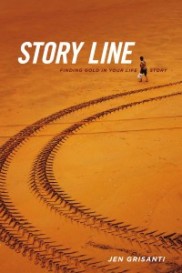
Jen's new book, just out this week: Two thumbs up!
SP: Do you want your writers to have the log line of their story before they begin, or is it something that’s only discovered with hindsight?
JG: I ask writers to write their log lines before they write their scripts. A true log line will show you everything that is working or not working in your story. Why write the script if the story isn’t 100% there?
SP: Can a strong log line help a writer sell his idea?
JG: Sometimes in a pitch meeting, a producer or studio exec will ask a writer straight-out, “What’s the log line?” A log line is the nucleus of a strong pitch because it demonstrates that you know your story cold and it helps the producer or studio exec to see the full power or “hook” of the material.
SP: Can a log line help a writer pinpoint weaknesses in the story?
JG: Absolutely. The log line will tell you if you empathize with your lead, if your dilemma is powerful enough, if your central character is active in his pursuit and if his goal is strong enough. The log line will highlight the emotional stakes of your story. What’s the worst that can happen if your hero doesn’t achieve his or her goal?
SP: Jen, I know you sometimes ask your writer clients to come up with the “log line of their own life.” Why do you do that and how does it help the writer?
JG: One of the first writing exercises in my new book, Story Line: Finding Gold In Your Life Story, is the Log Line for Your Life. I tell my writers to think in terms of Setup of Who, Dilemma, Action, and Goal. Later they’ll add fiction to truth. But your own truth will be the core of your log line.
An example of a log line that reflects a long ago moment in my own life is, “A new bride who lives in a fairy tale fantasy falls through a rabbit hole and when she awakens, finds herself President of Cheated On Anonymous.” This is the starting point. From here we can create log lines for television, feature, and novel concepts. For example, a log line for a TV show could be, “An idealistic bride soon discovers the truth about her marriage and must redefine her fairy tale, only this time in the real world.” A log line for a feature could be, “In an effort to experience her fairy tale moment, a young woman marries the wrong guy and discovers her truth in the process of going down the wrong road in order to get back on track.” A non-fiction log line could be, “A betrayed young woman goes on a spiritual journey for truth, which reflects a touch of wish fulfillment, while learning to balance real life and shed fantasy.” This illustrates how you can start with a truth, add fiction, then further evolve it into different platforms of story.
SP: I must tell you, Jen, that I’ve used the concept of “the log line of your life” in my own personal life this past year and it has really helped me (along with the concept of the All Is Lost moment). At a particularly difficult juncture for me, I asked myself, “What is my log line right now?” It wasn’t easy figuring it out, but once I did, it really gave me clarity.
Forgetting about writers and storytelling for the moment, how have you seen this concept help your clients (or yourself) in your real lives?
JG: I love to hear that you used this in your own life. I think this exercise is a healing one for many. It helps us to detach from our story and look at it for what it is. It’s our story. It helps us to reflect on the pivotal moments of our life and look at them in a new way. What tools did we use to get through it? What if we passed them forward to help others? This could mean that there’s a meaning behind why certain events happened in our lives. Your story is your gold. When you learn how to use it, you will find that you connect with your audience. This is your goal.
SP: This question may be beyond the scope of story consulting, but I’d be very interested to hear what you have to say. Suppose readers of this interview were new-business operators or dancers or photographers–or just people at a personal crossroads in their lives. Can the concept of “the log line of your life” help them too?
JG: I am so happy that you brought this up. I am going to speak at an event for female entrepreneurs. I will incorporate the exercise Log Line of Your Life as a way to help them understand their story and how knowing their story can lead to successful meetings and networking experiences. So, yes, this concept can help new-business operators or dancers or photographers. It’s an exercise that applies in every occupation as a way to stop isolation, create community and connect with your audience. This is the gift of your story. Once you connect with and understand your own story, you will connect with others.
DO THE WORK
Steve shows you the predictable Resistance points that every writer hits in a work-in-progress and then shows you how to deal with each one of these sticking points. This book shows you how to keep going with your work.

THE AUTHENTIC SWING
A short book about the writing of a first novel: for Steve, The Legend of Bagger Vance. Having failed with three earlier attempts at novels, here's how Steve finally succeeded.
NOBODY WANTS TO READ YOUR SH*T
Steve shares his "lessons learned" from the trenches of the five different writing careers—advertising, screenwriting, fiction, nonfiction, and self-help. This is tradecraft. An MFA in Writing in 197 pages.
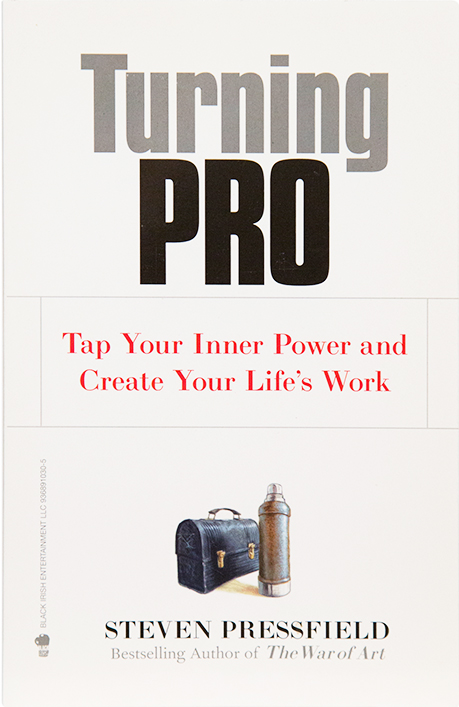
TURNING PRO
Amateurs have amateur habits. Pros have pro habits. When we turn pro, we give up the comfortable life but we find our power. Steve answers the question, "How do we overcome Resistance?"
Steven, I love this post. As a ghostwriter of nonfiction books, part of my job is helping clients figure out who they are before we begin. Speakers, experts, entrepreneurs and other nonfiction writers often think they can write a book based on accumulated knowledge and core concepts, but really, it’s all about story.
If you don’t know who you are and how your story connects with your content BEFORE you begin writing, you’re in for a tough, disappointing ride.
I will pick up Jen Grisanti’s book today and start using the “log line of your life” exercise with my clients.
Thanks for another great post!
Earlier this morning, I watched a video with Lonnie Burch, director of the National Museum of African American History and Culture. He speaks articulately about the role of photographs in helping to tell stories, to uncover narratives behind unidentified faces. He’s creating “log lines”, as I see in reading this post. The idea of applying the “log line” to life underscores the value of the stories we tell, and how we tell them, whether they are about our art, our business, or our personal circumstances. Very insightful!
Steven, Love sharing my resistance struggles with you. Thanks for bringing it all to the light of day.
I must say, there is something wonderful about how caring Jen comes across in everything she does. I have never met her, but her nurturing really comes through in this cold hard struggle filled writing pursuit.
She kinda of makes it all feel safe, and her book really reflects this.
Michael Weise does it again!
Steve Dworman, thank you so much for your very kind compliment. I really appreciate it! Anjanette, I am so happy to hear that you enjoyed it. Maureen, thank you for your comments. One of the exercises I have in Story Line is about taking your pictures and looking at the story beneath the smiles. I think that pictures are an excellent source of inspiration for log lines.
Namaste, Jen
What utter crap. Why not tell Shakespeare, Tolstoy, Dante, and Dickens to follow this crappy line of reasoning?
This kind of hack thinking makes me sick.
This is why the world is full of crap art, crap literature, movies, TV and so on. Because mediocrities this this think they can boil everything down to their own shallow and easily manipulated stupidity.
Argghhh! Crap Crap Crap!
Mark, I daresay that if you were handed a multi-million dollar contract for your work to be made into a film or television show, your attitude would most likely change. Success also DOES NOT ALWAYS EQUAL selling out or non-talent. Is Sting a sell-out musician because he is successful? Were the Beatles? Are any of your favorite and successful creative people any less talented because they attained success? I understand your frustration, believe me but you should look at anyone’s generosity & free advice as an opportunity to learn and use that information in other areas of your creativity and in life as well.
Okay. Rant response over. Carry on.
good interview! i always learn something from steve’s website. thank you !……oh, and it is Not crap…what is “Crap” is posting immature, illiterate comments to this site…evoking Shakespeare etc to that rant is ironically hilarious…………sr
Mark, Wow, you an angry guy. I am sorry that you were so offended.
I’ve studied story for 18 years. I’ve worked at top studios and helped to staff over 15 shows. I’ve also worked with some of our top storytellers. I have studied Campbell, Dickens and Tolstoy. My philosophy comes from this and from analyzing the shows that are nominated for Emmys and Oscars.
Negativity is not something I practice. So, I wish you the best.
Skip, thank you for your comment. I can see that you and I speak the same language.
I’m not angry or negative at heart, but share some of Mark’s sentiment, nevertheless. He seems to be railing against the idea of stripping art of its mystery and – dare I say – reverence. He seems to be railing against a formulaic approach to art as well as a somewhat myopic view of the creative process.
Knowing where you’re going with your art before you begin can indeed be dangerous; you walk a very narrow path right from the start and run the risk of failing to learn anything, of failing to open to material rich with possibilities for direction, renewal,or change.
And we all know – or should know – that Oscars, Emmys, and major book contracts do not always equate with excellence.
Liz, I totally appreciate where you are coming from.
For some spontaneity is a beautiful part of the writing process. For others, they like formula and guidance because it helps them. To each his own.
I wish you the best with whatever works for your process.
~ Jen
Great art comes from one place and one place only – it comes from Truth. If you have little or no Truth in you, you try and cheat with formulae, sentimentality, and cheap manipulation.
A great many people like Jen and Stephen can be very successful at being very shallow, offering people easy escape in action, thrills, and the ever present – and then, and then, and then. Oh boy. What fun. If you’re five years old.
As Saul Bellow said: “A great deal of intelligence can be invested in ignorance when the need for illusion is deep.”
What are these books, TV shows, movies really worth? A few hours of escape which people need?
Milan Kundera likens plot to getting into a closed carriage that races through dark streets to its known destination.
Every work of commercial or genre fiction has the pathetic quality of giving away it’s ending in its very first paragraphs, too.
Lots of money to be made, though, by pandering to the low brow and shallow tastes of the masses. In fact, such works helps make people dumber and shallower.
Steven will say that the military men reading his books aren’t dumb or shallow at all.
Then why aren’t they reading The Iliad and War and Peace, instead of his very light, plot driven bits of fluff? Escape? Well, good for them.
How many people here have even read the Bible? Plato? Shakespeare? Dante?
95% of humanity are idiots (everyone’s an idiot at some time but 95% are always idiots), and they like dumb and shallow stuff. Making money off of them is fine, but let’s not pretend you’re doing art or something great.
Mark,
You should read my new book “Story Line: Finding Gold In Your Life Story.” It’s all about finding your truth and going inside for answers. I bet you’d really like it.
Steven is a gift to every storyteller. There is nothing shallow about him.
Formulas do serve a purpose for some people. They are there to help guide. No one says that you have to utilize them but they are being taught by some of the best instructors on story out there and there is value to them.
Jen
Those are very strong statements to make regarding the state of the collective human mind. It must be a frustrating world for you to daily find yourself a part of. I am sorry you see life the way you do, it seems that it would make it quite the challenge to participate in every day exchanges in a positive manner.
Steve and Jen
This is a beautifully conducted interview! I loved the breakdown and explanation of a log line and the examples were perfect! This page goes to my favorites!
Thanks again for all the invaluable information!
Mark buddy
I was a military man who read and enjoyed Pressfield’s work. What relevance do his story’s have to the modern fighting man, you ask?
Well as one who was directed to read Xenophon and other Greek conflict based classics, which I was exposed to through storytelling of historical events, it brings much to the table.
I agree with your sentiments, in regards to such historical reprisals such as the recent movie the ‘The 300’. That was not based on Pressfield’s work, ‘The Gates of Fire’ and most military men I talked would have rather liked to see Pressfield’s version presented instead of a comic book. That is the style I believe you are abhoring.
Perhaps you should take the time to re-read some of Pressfield’s work, but consider them from the standpoint of an 18-20 year old Marine who has no access to anything in the modern world that will remotely prepare him for the savage enemies we face in this day.
He serves the military through his stories, by immersing them in a world that they find similar, and it often is the first step towards researching the classics for many young warriors who do not do so through college. I would also say that the quality of digestion of these works is higher because they are sought out instead of forced upon.
Many people physical people appreciate the beauty and formulae across numerous physical disciplines, dancing, music, martial arts. These people do not respond to abstract conceptive art.
In using formulae to tell a story or express art it is the same. An audience comes to learn how a particular storyteller performs and that allows them comfort and familiarity in the reception of a story.
In this way, a wider audience, or a particular audience is reached.
I believe it the height of close-mindedness to discount a way of story telling without researching the story teller himself.
Jen – Please consider doing a kindle version of your book. I’m currently living in Mexico and it takes weeks to get print books down here. If you have a kindle edition, I would buy it immediately. The process of conversion doesn’t take long, you can probably have someone create it for $100 or so.
Thanks! – Ryan
Seems to me, Jen is trying to help writers learn how to use their own experiences to connect with audiences. Learn how to write stories that share an emotional bond with the audience – a familiar experience.
Jen – I haven’t read the book – but it sounds like what you’re teaching can really help writers find what it is they really want to say in their stories.
Jen/Steve – I like hanging out here, and I like the idea of personal storytelling. I am a professional financial/wealth advisor/planner, and at times, most times really, I’m most effective with creating “call-to-action” through the use of story (nonfiction, usually). I’m dealing with some of the most personal and deep dreams and fears of my clients – their life log lines, if you will – and storytelling reinforces our mutual trust and respect. And it gets the job done – getting folks to break their blocks – without using fear, intimidation, or that worst of all personalized attacks, uninformed, shallow criticism.
What a long strange trip it’s been. Looking back over my own life, I realize that my own career direction (and actualization) is very deeply threaded with my personal life’s log line, much in the way of Jen’s princess.
Happy Sunday
Intrigued by responses to you Jen especially by the dear “Searching Mark”. Lin Yutang, The Importance of Living, writes: “A reader is always carried into a world of thought and reflection. The best reading is that which leads us into this contemplative mood, and not that which is merely occupied with the report of events. Reading like matrimony, is determined bt fate. Even if there is one book that everyone must read, like the Bible, there is a time for it. When one’s thoughts and experience have not reached a certain point for reading a masterpiece, the masterpiece will leave only a bad flavor on his palate.
I regard the discovery of one’s favorite authors as the most critical event in one’s intellectual development. There is such a thing as the affinity of spirits, and among the authors of ancient and modern times, one must try to find an author whose spirit is akin to his own. Only in this way can one get any real good out of reading.” When the time is right for each of us,the author will appear.
Thanks! This was helpful. I pulled my logline off in about five minutes.
I’m currently reading THE WRITER’S JOURNEY Mythic Structure for Writers by Christopher Vogler. It covers a similar topic. I understand why Mark feels wary about cookie-cutter plots but it seems all stories – classic and contemporary – need these archetypes and plots. The creativity of the writer is what makes something new out of these ingredients. Could it be that sometimes the crux of the log line is often discovered during the writing rather than before? It could be like a compass to see if the story is on track…or to help you realign the narrative when you’re lost in the fog…
Log lines are a part of the business and they are very useful and even accurate for a certain kind of movie, but the more character-based a script, i.e. the more it’s about the how of the story rather than the what, then the more reductive and unhelpful is the log line. I heard Alan Ball tell the story of how “American Beauty” got made. In each step up the green-lighting ladder, someone said forget the log line and coverage, you have to read the script because if you break it down to a middle aged man has a crisis of faith and career, doesn’t it sound like a hundred other movies previously made rather the unique and brilliant script that “American Beauty” is. But this championing of a script is a highly unusual story and only occurred because a number of people got very passionate about that script and were willing to stake their reputation on the line. For the average writer, you have to find some way to make your log line interesting while still being accurate.
Seems to me, Jen is trying to help writers learn how to use their own experiences to connect with audiences. Learn how to write stories that share an emotional bond with the audience – a familiar experience.
Jen – I haven’t read the book – but it sounds like what you’re teaching can really help writers find what it is they really want to say in their stories.