Sex Scenes

I once did a rewrite on a porn flick. Before I began, the producer wanted to get together with me, to give me my marching orders and to make sure that I didn’t slow the project down by making avoidable rookie mistakes. We met for breakfast at a coffee shop in Santa Monica. In that meeting, I got two of the best lessons in writing I’ve ever received.
Why porn is so bad
“Kid, every porno movie is the same: talk, talk, screw, screw. That’s why they’re so lousy. That’s not good story-telling. Here’s what I want from you: when you get to a sex scene, don’t let the story come to a screeching halt while we watch two people diddling each other.”
Wow, I thought, that’s pretty smart.
“Make the screwing scene advance the story,” the producer said. “Wherever the story stands when the actors start banging each other, I want it to have moved to the next level by the time they finish.”
In other words, he said, if it’s a private eye and his gorgeous client, by the time they finish, their relationship has to have advanced—she confesses something, he reveals some secret, whatever. The story has “turned” and mounted to a higher level.
I confess I had gone into this breakfast expecting the worst—and even condescending in my mind to what I imagined was some pretty low-level entertainment. Now the scales fell from my eyes. My employer had become a mentor. Immediately I grasped that the don’t-stop-the-story principle could be applied to other, more mainstream genres.
Action movies. “Don’t let a car chase stop the story in its tracks. Make the action sequence advance the story.” Flashbacks and backstory. “Don’t let these turn into detours or story-killers; make them carry the story forward.”
How to keep sex from being boring
“Okay, kid, you got it? Here’s the second thing I want from you. Never write me a sex scene where nothing happens but the sex. Always have something else going on at the same time.”
Example: “The wife is getting it on in the bedroom with the horny carpenter. Now the husband comes home unannounced. He enters the front door. The husband doesn’t know the wife and the carpenter are in the bedroom. They don’t know the husband has just come in the front door. Now we’ve got something! We can cut back and forth and milk the suspense. It’s not just two people screwing, see? And when the husband discovers what his old lady’s up to, we’ve advanced the story!”
Another bulls-eye. This second principle could be applied to all kinds of situations. Wow. And I was getting paid for this too!
My porn career ends
In the end the movie never got made—and I never got paid. A couple of years later, I was out having dinner at a different restaurant when I saw the producer come in with his wife and young kids. It’d make a more colorful story if he had been a cigar-chomping Tinseltown philistine—but in fact he was a sweet guy and a regular family man. I wanted to thank him for what he had taught me. I had put it to use, over and over, on other, PG-rated projects. But I thought, seeing him with his children in tow, that maybe discretion was the better part of valor. I exited without going out of my way to catch his eye.
But thanks, Henry. I learned more about storytelling from you in twenty minutes over eggs and hash browns than I did in four years of college.
DO THE WORK
Steve shows you the predictable Resistance points that every writer hits in a work-in-progress and then shows you how to deal with each one of these sticking points. This book shows you how to keep going with your work.


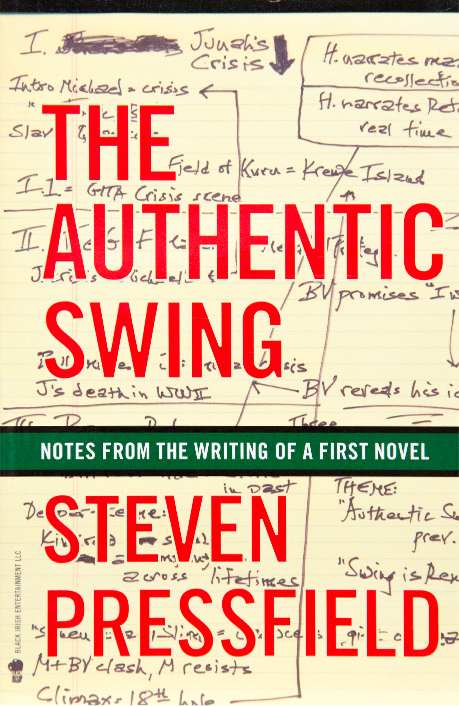
THE AUTHENTIC SWING
A short book about the writing of a first novel: for Steve, The Legend of Bagger Vance. Having failed with three earlier attempts at novels, here's how Steve finally succeeded.
NOBODY WANTS TO READ YOUR SH*T
Steve shares his "lessons learned" from the trenches of the five different writing careers—advertising, screenwriting, fiction, nonfiction, and self-help. This is tradecraft. An MFA in Writing in 197 pages.
TURNING PRO
Amateurs have amateur habits. Pros have pro habits. When we turn pro, we give up the comfortable life but we find our power. Steve answers the question, "How do we overcome Resistance?"
Yet more proof that we can learn some of the best things, in the most surprising of places if we’re open to it. Another excellent post, thanks.
Wow. It’s amazing how you can learn something really important in an unorthodox situation!
Great advice! Sex scenes can be uncomfortable to write, but with an objective in mind (to move the story along) makes it easier and much more interesting.
Wow. I found your site after watching your interview with Glen Reynolds on PJTVand also greatly enjoyed Gates of Fire.
I’ve been trying to find the inspiration to start my own political blog. After going through the introspection that comes from surviving a recent heart attack, I’d like to do something constructive and informative with the extra time I’ve been given. I think I’ve found that inspiration here in your Wednesday column. Please keep the advice coming!
Mr. Pressfield,
The producer gave you a good lesson. That is clear. But if one is not openminded at that very moment, it is easy that the lesson is wasted. Two to tango, you know…
Thanks for the simple, direct yet deep advice.
As always, writing worth reading. Thanks.
Dear Mister Pressfield,
I am an avid history buff, my personal studies began with ancient Rome and on into early European history. I was eventually led to ancient Greece which I must say has been the most fascinating and talk about a rich history! I had been familiar with the legend of the 300 Spartans of Thermopylae , but I did not know the whole story until I read “Gates of Fire” and also a wonderful book by Paul Cartledge titled “Thermopylae the battle that changed the world”, both are informative and are among my favorites.
I of course have seen the movie “300” and like most I found it to be quite entertaining, but I am afraid that even though this movie has exposed a massive audience to the legend of Thermopylae (I bet there are a lot more average Joes on the street today who would recognize the name “Leonidas” than prior to the release of 300) it has done little to educate it’s massive audience.
I am just one of many people out here who would love to see “Gates of Fire” made into a motion picture, and I believe that since 300 was more of a “fantasy epic”, that there would seem to be room on the big screen for a movie made from a more historical approach.
Of course any telling of this story would have to include the “ultra violence” as depicted in 300 otherwise it would not be an accurate telling of the story (and we already have that in 300) also I understand that any movie made in Hollywood would have to also be entertaining to the mass audience, and not just a “documentary” so to speak, but I also feel that this is a story that does not require additional dramatics, it would seem to me at least that this story stands well on it’s own!
Anyway I just wanted to thank you for such a wonderful book and say that I hope to see it on the big screen someday.
Sincerely,
Mark H.
[…] to the story. You want to make sure EVERY MOMENT featured in your comic pushes something forward. Steven Pressfield writes in his Writing Wednesdays post about some of the best advice he’s ever gotten–from a […]