August 21st, 2010
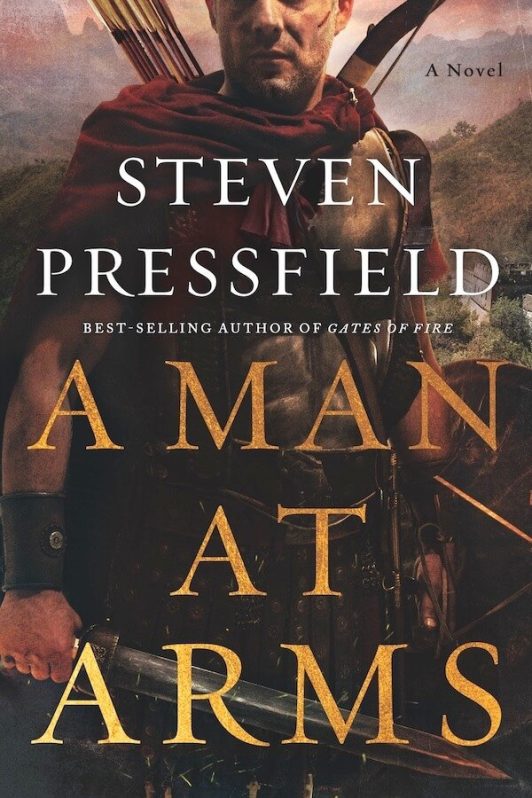
Day Four of “Journal of Finishing a Novel” and we’re done! Yesterday’s work took us all the way to THE END. I think it works. I hope so. But I will not drive myself crazy, chewing it over. Instead I will start today, as soon as I finish writing this post, revisiting and reworking a couple of sticking points in the narrative that I’ve bypassed on the headlong march to the finish.
These go-backs can be particularly scary. In fact I’m more trepidatious about today’s work–and the next few days’–than I was about the actual climax. The alternative to bypassing such sticking points though (i.e., dealing with them in the real-time flow of start-to-finish) is too risky. They can bring the work to a grinding halt. And that must be avoided at all costs.
I’m a believer in bypassing parts of the story that are non-essential but that put up a stubborn fight when you try to lick them. Those pockets of resistance will break our momentum, bog us down and wear out our spirit. If we let enough of them build up, they can wind up defeating us entirely.
When the First Marine Division invaded Iraq seven years ago, its #1 priority was to get to Baghdad–fast. Baghdad for you and me is finishing the book, completing the project. That is Job One, because once we’ve done that, we’ve won the war. If we have to go back and mop up Al Kut and An Nasiriyah later, so be it. At least we’ve got the campaign in hand.
So I’ve got to THE END, which is great. But now I have to pay the piper of passages I’ve skipped over.
The last big pocket of resistance is a long sequence—seven or eight pages—where I originally killed off a major character. Only now I’ve decided to keep him alive till the climax. His death in the originally-bypassed sequence was the Big Bang that gave the sequence its punch. Now that’s gone. I’ve got to come up with something to replace it. I have no idea what that’ll be.
Okay, I can feel this journaling is turning into Resistance and avoidance. That’s enough for today. Let’s get to work and see what we can come up with … Read the rest of this entry »
Posted in Writing Wednesdays | 9 Comments »
August 20th, 2010

Erik Proulx: Filmmaker, Writer, Speaker, Change-Maker Extraordinaire. Photo Credit: Courtney Perkins.
The film “Lemonade” was my introduction to Erik Proulx. It is inspiring, uplifting, motivating—all the good stuff—and is a strong reminder of our abilities to reinvent ourselves—hard-charge our dreams, at any moment. A 15-year veteran of the advertising industry, Erik created commercials for brands like Volvo, Fidelity Investments, GMC Trucks, and Perdue Chicken. Then, two days after being offered a raise and a promotion, his agency laid him off without ceremony. He responded by creating “Lemonade” and the blog Please Feed The Animals. His experience, combined with the collective experience of the hundreds of people he’s interviewed for Lemonade (the book), has made him an insightful speaker, author, and advocate for personal and professional reinvention. He has appeared on CBS Evening News with Katie Couric, NPR’s On Point, ABC News with Tory Johnson, and several other national print and broadcast media to discuss his front-line exposure to the shifting attitude around work and careers. Erik has been a contributing writer to Advertising Age, Adweek, and Creativity Magazine, and his “Dads Without Dads” column is a regular feature in The Good Men Project Magazine. Erik is currently filming “Lemonade: Detroit” about the reinvention of a city trying to redefine itself after the collapse of the auto industry. Read the rest of this entry »
Posted in The Creative Process | 4 Comments »
August 20th, 2010
Okay, Day Three. Momentum is strong and I will hit it hard again today. (If you’re just tuning in, please scroll back to the prior two posts—yesterday and the day before—to see what this is all about.)
Though Resistance is monumental, at least for me, when I get close to the end of a project, there is one happy tailwind (beyond knowing exactly what the beats of the story have to be) and that is that in the climax to anything there’s no time for digression or description or exposition. It’s pedal to the metal all the way. Momentum, momentum, momentum.
A couple of thoughts:
In these posts I sometimes like to come clean about my inner fears and failings. The reason I do this is because I think such confessions are helpful to younger writers, who might fall into the trap of being too hard on themselves or holding themselves to some impossibly high standard, which then becomes a form of Resistance and beats them down unnecessarily. So, just so you know, even a grizzled salt like me screws up all the time and has to learn the same lessons over and over and needs to reach out for help—and does. To wit:
The draft I’m working on now is, I think, about the thirteenth. So a massive amount of work has gone into this thing already—except for the final fifth, which is brand-new. Why? Because I gave the prior draft to my most excellent friend/editor/publisher/agent, Shawn Coyne (who was the original publisher of The War of Art), and he had the gall of offer some great ideas.
I’ve been wrestling this alligator for almost three years, beating my brains out on the question, “What is this thing about? What’s the theme?” After all that time, I still couldn’t articulate it. But Shawn wrote me a long e-mail, with two paragraphs that nailed it exactly—and showed me that I had to change the ending. I had to redo the final fifth.
Flashback: this is the THIRD rethink so far. Two prior reboots were from Page One. What point am I trying to make? That this stuff is hard. I haven’t finished a book yet that didn’t have at least one false start–and that didn’t profit from major input from friends, editors, agents and colleagues. Every time this happens, my ego receives a severe drubbing. Oh no, you mean I can’t do this all by myself? No, Steve, you can’t—and neither could Hemingway or Joyce (well, maybe Joyce) or anybody.
My last novel (2007) was a WWII story called Killing Rommel. I worked on the screenplay version with another good friend, Randall Wallace (Braveheart and the upcoming Secretariat). Before we’d gotten five minutes into discussing how the book had to change to become a movie, Randy hit on a total story screw-up on my part. In the book I killed off the most interesting character before the main action adventure even began. “Code Blue!” Get the paddles! The story got twice as good the second we brought that character back to life.
It’s so easy to get too close to something. We work so hard sometimes that we can’t see what’s right in front of us. That’s why I’m doing the last fifth of this book over—and why it’s all brand-new to me.
And so to work. Read the rest of this entry »
Posted in Writing Wednesdays | 12 Comments »
August 19th, 2010
This is Day Two of our week-long, one-post-every-day “Journal of Finishing A Novel.” (See yesterday’s post for Day One.)

I'm shocked ... shocked to think that Bogey and Ingrid are metaphors!
Today’s work will be a lot scarier than yesterday’s because today I’ll really get into the meat of the climax–a long scene that has to work or the whole book fails. My method for dealing with this kind of anxiety is not to think about it at all. I’ll just do it.
Couple of notes:
1) By no means will today’s work be “winging it.” I know exactly what beats have to be hit and in what order. The climax’s shape has been dictated by every scene and sequence that has gone before. That’s why they went before.
The two primary characters—protagonist and antagonist—have been set up by dozens of scenes and moments, so that the reader will know both who they are as characters and what they represent in terms of the book’s theme. The two minor characters who will appear have also been set up by numerous beats throughout the story. I know how they have to clash and what the outcome has to be.
The physical setting for the climax has also been established in the reader’s mind by earlier scenes—both what and where the site is and, more importantly, what it represents thematically.
I’m a big believer that every character and place in a story must not only be “itself,” but must represent an aspect of the theme. So that—in Casablanca, say—Bogey represents something, Ingrid Bergman represents something, the plane to Lisbon represents something. In the climax when Bogey puts Ingrid on the plane but doesn’t get on himself, that act—even without dialogue—says everything thematically that the story wants to say.
All that being said, I can’t do this climactic scene today “by the numbers.” It depends on passion and immediacy. There’s no way to make that happen except the way actors do it—by getting into the moment emotionally and letting it rip. So, though I know what I have to do today, I don’t know how. That’ll come in the moment.
2) I’ve read that Michael Crichton, as he approached the climax of a book, used to get up earlier and earlier in the morning—till he was getting out of bed at two-thirty and driving his wife crazy. He finally just moved out of the house, checked into a hotel (the Kona Village, I believe) to hunker down to a writing blitz till it was over.
I’m the same way, but without the hotel. It’s too hard otherwise. I have to screw my emotions up to a fever pitch because Resistance gets so high. The earlier I start, the better. That’s my style anyway. I’m not a midnight kinda guy.
And so to work. See you tomorrow. Read the rest of this entry »
Posted in Writing Wednesdays | 10 Comments »
August 18th, 2010
I’m going to try something different this week. Instead of one full-length post that stays up for seven days, I’m gonna do short, one-a-day “journal entries.” A new one will go up Wednesday, Thursday, Friday, all week. The reason I’m trying this this week is that, in my real writing life, I’m just now plunging in on the last ten or twelve pages of the novel I’ve been working on for the past three years. I’m thinking that a real-time, “under the helmet” look at one writer’s process might be of interest.

Steinbeck's "Journal of a Novel," a fascinating look at a writer's process
To implement this, I’m going to borrow the concept from John Steinbeck’s Journal of a Novel (an early-AM diary he kept while writing East of Eden) and do these short posts as warmups each morning. When I’m ready to work, I’ll stop the post and sign off till tomorrow.
Okay. Here’s what’s going on inside me right now re finishing this book:
Resistance is monumental; I feel it like a massive brick of fear. But I have three things, at least, working in my favor.
1) I know from experience that Resistance always puts on a full-court press when the finish line heaves into view. So I’m ready for it. I’m not surprised. I know that those voices in my head that say, “What if you screw this up … what if you can’t pull off this climax, etc.” are pure Resistance. They are not thoughts, they are “thoughts.”
I dismiss them. They are lies and bullshit.
2) I also know from experience that the alternative to doing my work is a hundred times worse than the pain or fear of doing it. I remember vividly the seven years when I did yield to fear and Resistance—and the hell it was for me and for people I loved. I can hear the whip crack. The fear of not doing it is stronger than the fear of doing it.
It’s kind of like finding yourself a thousand feet below the summit of Everest, with a 26,000-foot sheer drop-off beneath you. There’s no real option. It’s climb or die.
3) I’m a professional who has faced this stuff down a thousand times. I will plunge in and give it my all.
That’s the warmup for today. See you tomorrow. Read the rest of this entry »
Posted in Writing Wednesdays | 17 Comments »