A Natural Life

Being a writer is not a natural life. Of course it’s not natural working in a coal mine or a cubicle either.
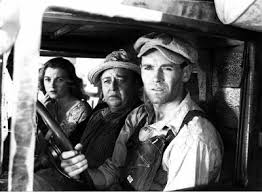
Henry Fonda, Jane Darwell and Dorris Bowdon in "The Grapes of Wrath"
What is a “natural life” anyway? Is it living in alignment with evolution? Is it the nomadic life, the hunter’s life, the farmer’s life? If we live in the city, have we cut ourselves off from the organic voyages, migrations, and rhythms of the human soul?
The life of the artist is artificial. Art by definition is artificial.
What exactly is the artist’s life? What shape does it take, day-to-day?
What you and I do as artists and entrepreneurs is we impose an order and a structure upon the day. We do this by an act of the will. We don’t let the day take us wherever it wants to. We resist. We refuse to live reactively. We view the vagaries, crises, and emotions that the day presents to us as distractions. We dismiss them.
Does that mean we’re not living naturally? How do you define “natural?” Some might declare that the human being in a natural state will maximize pleasure and minimize pain, respond to emergencies and physical and emotional needs, chase money or love/fame/sex/power, hang with his homies, have fun, get wasted, do what he believes he’s expected to do and seek to be what he believes he’s expected to be. He will live, as George Harrison might have said, “in the material world.”
Is the writer’s or the artist’s life more natural? It’s certainly not “natural” to do what a writer does or to live the way a writer lives. It’s not natural to think the way a writer thinks. It’s not natural to be a surgeon either, or a ballerina or a pianist. To work at the barre? To practice scales?
What you and I do does not come naturally. It’s a cultural response to the experience of life. It’s a response to the human condition.
Here is where the argument takes an interesting and significant turn. What is the human condition? It’s the state of being suspended between two worlds and finding it impossible to fully enter into either. If you’ll forgive me for quoting from Turning Pro:
As mortal flesh, you and I cannot ascend to the upper realm. That sphere belongs to the gods … Our lot, instead, is to dwell here in the lower realm, the sphere of the temporal and the material—the time-bound dimension of instincts and animal passions, of hate and desire, aspiration and fear.
We’re stuck in the lower world but we yearn for the higher. We remember it, though we don’t know from where. We miss it. We feel pulled toward it. We aspire to it.
The artist has a device by which she tries to touch this upper realm. That device is inspiration. Which brings us back to the unnatural natural life of the artist.
By imposing a structure of work and dedication onto the day, the painter and the dancer and the filmmaker may be living an unnatural life in the temporal dimension, but they’re living the most natural life of all in the dimension of the spirit.
You and I impose order onto our days not to make ourselves stiff or rigid or wooden but in order render impotent the pull of the superficial and the random and the current. We fix our attention not on the petty opportunities and emergencies of the day but on our inner Polaris, even if it’s something as humble as a kiosk business we’re trying to launch or a free app we’re aiming to design. We banish distraction so that we can address our call, our Unconscious, the summons of our Muse.
Is that natural?
To me, that’s as natural as it gets.
There’s a chapter in Turning Pro that talks about migrant labor, about following the harvest from season to season.
You and I … migrate too. We follow the Muse instead of the sun. When one crop is picked, we hit the road and move on to the next.
The river of our lives flows on two levels. We can’t ignore the first one, the material dimension. It’s important. It demands, justly, our attention. But our real life, our natural life, is unfolding within a different sphere. That dimension is the one that the artist and the entrepreneur call home, and they will bend the first dimension into any shape they have to, to find their way to the second.
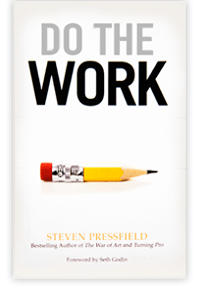
DO THE WORK
Steve shows you the predictable Resistance points that every writer hits in a work-in-progress and then shows you how to deal with each one of these sticking points. This book shows you how to keep going with your work.

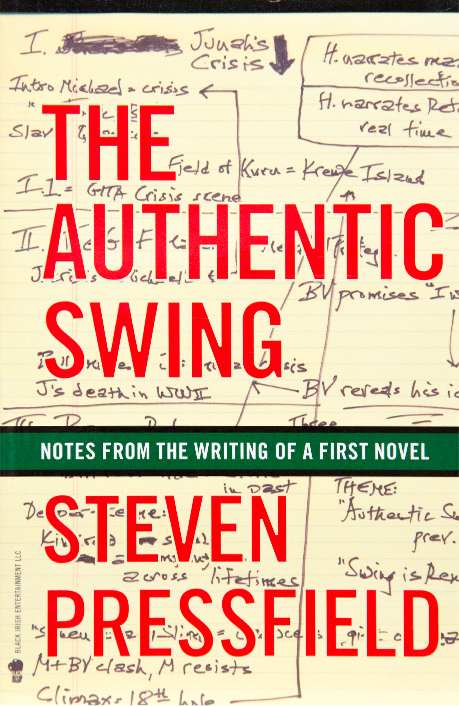
THE AUTHENTIC SWING
A short book about the writing of a first novel: for Steve, The Legend of Bagger Vance. Having failed with three earlier attempts at novels, here's how Steve finally succeeded.
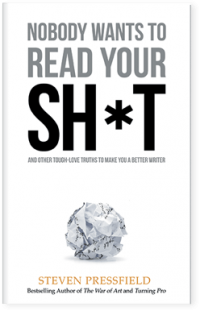
NOBODY WANTS TO READ YOUR SH*T
Steve shares his "lessons learned" from the trenches of the five different writing careers—advertising, screenwriting, fiction, nonfiction, and self-help. This is tradecraft. An MFA in Writing in 197 pages.
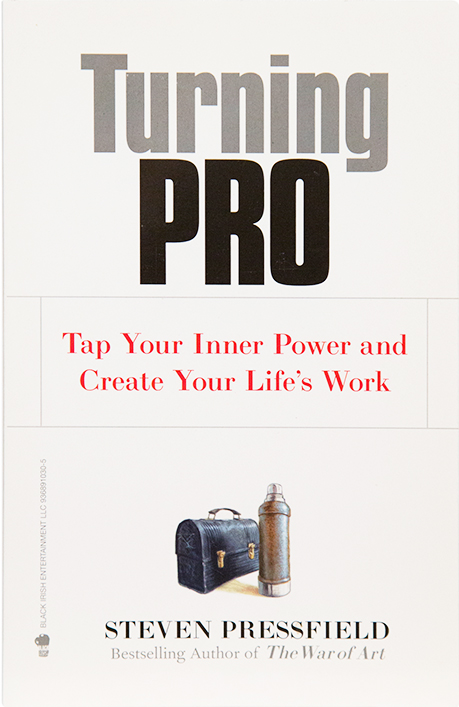
TURNING PRO
Amateurs have amateur habits. Pros have pro habits. When we turn pro, we give up the comfortable life but we find our power. Steve answers the question, "How do we overcome Resistance?"
An inspired and inspiring post!
Practical brilliance once again.
Raking the leaves.
Imposing an order,
Leaves or me?
I’m about your age and I’m liking Right brain more and more! Question: How to get back to Engineer brain long enough to handle the material side?
PS Have read all your “work” books!
Great post. Sometimes being a writer can make one feel a bit abnormal. But as someone said recently, abnormal is just above-normal. I like that.
Prophecy is poetry, the best poetry is prophetic (I can quote myself).
Lasker called life a struggle, which is the fight against and with Resistance, which is the inner quest, the paradox of life in the middle.
Thanks, as always, for getting us into, through and especially over the hump.
Love it.
Where would Don Quixote be without Sancho Panza? But what would Sancho be without his Knight of the Sad Countenance? He certainly wouldn’t ever have gotten his island!
We all want our island, but how many of us are willing to follow the Don?
And the saga continues. We are caught in a mixture of warrior and sage.
The Onion had a really funny article today about this same topic. “Find what you love and do it for the rest of your life on nights and weekends”. The article is really talking about depth of commitment. Do you want to look back on your life in 30 years and regret you didn’t give it everything you had? Is living a “normal life” really about giving up on your dreams? It seems to be what is “normal”.
Mom + Writer = Circus Juggler…but I do it anyway.
This is great. I’ve been spending the last few days reading numerous books and listening to different speakers on various subjects. They all seem to converge to this thinking.
Sometimes the artist can get distracted by the feeling that he or she’s not “fitting in” or being a “normal” human being because we reject distraction and bend the normal life to fit our craft. It can make one feel guilty or inadequate, but the more I read these articles and books then more I see that’s not the case.
What I wrote on FB: OMG.. does this message resonate: “What exactly is the artist’s life? What shape does it take, day-to-day?” This morning as I walked my dog just before sunrise… I heard BIRDS. They were singing the most glorious melody. I KNEW this morning that SPRING was on it’s way. There are flowers in bloom. I felt relief. I always come more alive as the seasons do and pray that my art does too.
I especially liked this post.
After some of these posts I can’t help but wonder how much thinking must be in the backround of what’s written.
Society won’t allow a natural life. Then again it outlaws the savagery of a natural life, unless you have the right contacts, lawyers and CPAs and can whistle WMD in tune. “Normal”? Normal is just a matter of opinion. For me, writing is self-therapy in a F-in crazy/majority gullible society. Maybe not majority, but who was it that said something like evil will get it’s way as long as good men do nothing? I know that’s a bad paraphrase, but you get it. Writing may be societies way of commenting on it’s own sickness. Therapy.
“So you ride yourselves over the fields and you make all your animal deals and your wise men don’t know how it feels to be thick as a brick” -Ian Anderson AKA Jethro Tull
of course Joe Campbell said we can never change the world, only ourselves. And whos to say my writing would make it better or that my view is better? I’m not wise. I make blunders everyday.
So, why do we write? Muse or ego?
How about a little healthy debate?
Does anyone use Scrivener? What do you think of it?
OK, I’ll say something nice.
The artists life is available to everyone and I believe it is in living one’s AUTHENTIC life.
Steve referred to this in Bagger Vance, but that’s far from it’s only reference. I find more reference to the idea in Eastern than Western philosophy, but maybe someone can show me Western references. Anyway, duh, isn’t it obvious? Society is George Lucas’ Empire and the rebels just want authentic life/self.
Doesn’t matter if you feel close to it when admiring nature or in conversation or painting or writing or that business you start software you write or if you want to keep the parking lot clear of shopping carts or hitting the golf ball as one. If you feel satisfied with what you do, you’re a lucky one. IMNSHO.
Works for me, as well well as anything, but damn making money gets in the way! Bugger! So doing what you bliss and getting paid for it! Orgasm!
Well, I started out nice! 😉
So beautiful and inspiring. I shared twice in the space of a minute. Love the inner Polaris.
I just found a copy of The War of Art at a second hand bookstore this weekend and read it in a day. I so appreciate that you wrote that…I felt like it was just for me.
I’m so glad you have an active presence here on the web because I look forward to reading more from you!
This is an incredible post! I couldn’t agree more.
I think it’s important for writers to do things like yoga, long walks, playing with their kids, etc. These things help our minds spend time in the here-and-now. Even hunters/coal mine workers were connected to their bodies when they worked. I think dreamers/writers/artists should remember to connect with their surroundings every once in a while. Otherwise we might get so caught up in writing that we forget to eat.
Well, ‘Old Sport’ this is a day of dark recognition.